
Search Engine Visibility: How to Help Your Website Get Found
Having a website is only the first step towards reaching people online. For potential customers to discover your business, your pages need to appear when they search for relevant products, services or information. This is where search engine visibility comes in.
Improving visibility is not simply a matter of reaching the top position for one keyword. It involves making your website accessible, useful and relevant across the searches that matter to your audience. A considered approach can help you attract more qualified visitors and build a stronger presence in search results over time.
What is search engine visibility?
Search engine visibility describes how often and how prominently your website appears in unpaid search results for relevant queries. It can relate to traditional web listings as well as features such as local results, image results and featured snippets.
Visibility is different from traffic. A page might appear in search results frequently but receive few clicks, or it might attract visitors for a small number of highly relevant searches. Both impressions and visits are useful, but they tell you different things about your website’s performance.
Why does search visibility matter?
People often turn to search engines when they are researching a problem, comparing options or ready to make a purchase. If your website appears for the searches that match your offering, you have a better chance of being considered.
Strong visibility can help you:
- Reach people who are actively looking for your products, services or expertise.
- Build awareness of your brand over time.
- Bring relevant visitors to useful pages on your website.
- Support other marketing activity by giving people another way to find you.
Search performance takes time to develop, and results are never guaranteed. Search engines regularly update how they assess and display pages, so a sustainable approach focuses on quality and usefulness rather than quick fixes.
What affects search engine visibility?
Relevance and quality of content
Your content should clearly address the needs behind a search. Before creating or updating a page, consider what the visitor wants to know or do. A person searching for guidance may need a detailed explanation, while someone looking for a particular service may want clear information about what you offer and how to get in touch.
Write for people first. Provide accurate, original and easy-to-understand information, and organise it with descriptive headings. Avoid repeating keywords unnaturally: it can make a page harder to read without making it more valuable.
Technical accessibility
Search engines need to be able to discover, crawl and understand your pages. Technical issues can make that harder. Common areas to check include:
- Whether important pages can be crawled and indexed.
- Broken links, redirect problems and duplicate pages.
- Page loading performance and mobile usability.
- Clear page titles, headings and descriptive URLs.
- Accurate XML sitemaps and suitable use of robots instructions.
Technical SEO does not replace good content, but it helps ensure that useful content can be found and interpreted properly.
Website experience
A website should be straightforward to use on different devices. Visitors need to be able to find information, read it comfortably and complete actions such as making an enquiry or placing an order. Clear navigation, readable text and fast-loading pages all contribute to a better experience.
Reputation and links
Links from relevant, trustworthy websites can help search engines understand how pages relate to one another and may bring visitors directly to your site. Focus on earning links naturally by publishing useful resources, building genuine industry relationships and creating content people have a reason to reference. Avoid buying links or using schemes designed to manipulate rankings.
Local signals
For businesses serving a particular area, local search visibility is especially important. Keep your business name, address and telephone number accurate across your website and relevant listings. A complete business profile, genuine customer reviews and location-specific service information can also help people find and assess your business.
How to improve search engine visibility
-
Understand your audience.
Identify the questions, needs and language of the people you want to reach. Speak to customers, review enquiries and use keyword research tools to discover relevant search topics.
-
Choose a clear purpose for each page.
Give every important page a defined role. For example, a service page should explain the service and help visitors take the next step, while an advice article should answer a specific question in useful detail.
-
Improve existing content.
Review pages that receive impressions but few clicks, have fallen in performance or no longer reflect your offering. Update outdated information, strengthen the page’s focus and make its title and description clear and appealing.
-
Make your website easy to navigate.
Use logical menus and internal links to connect related pages. This helps visitors find more information and can help search engines discover important parts of your site.
-
Check technical health regularly.
Use tools such as Google Search Console to monitor indexing and search performance. Investigate unexpected changes, and check important pages on mobile devices as well as desktop computers.
-
Build trust through useful, accurate information.
Show who is responsible for your content, provide clear business details and support important claims with reliable information. Keep content maintained, particularly where accuracy matters.
How to measure visibility
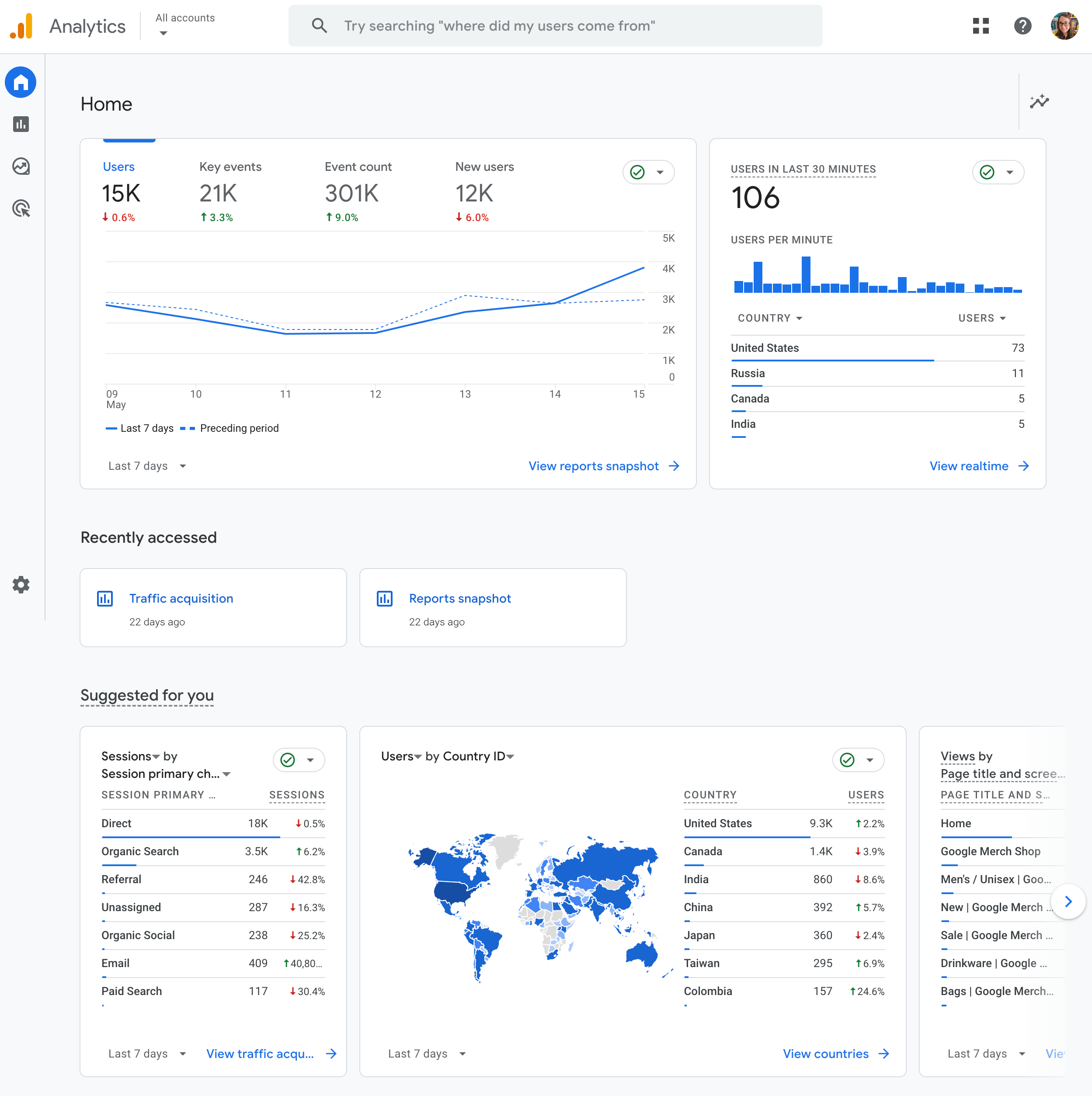
Use a combination of measures to understand what is happening. Search Console can show how often your pages appear in Google search, which queries bring impressions and clicks, and the average position of your results. Analytics tools can help you understand what visitors do after arriving on your site.
Useful indicators include:
- Impressions: how often a page appears in search results.
- Clicks: how many people visit from those results.
- Click-through rate: the proportion of impressions that result in clicks.
- Search queries: the terms people use before reaching your website.
- Organic conversions: meaningful actions completed by visitors from unpaid search.
Look at trends rather than relying on a single ranking or reporting period. Search results can vary by location, device and query, so one position check does not tell the whole story. The most useful measure is whether search is helping the right people discover your business and take valuable actions.
A long-term approach to visibility
Search engine visibility is built through consistent work: understanding your audience, publishing genuinely useful content, maintaining a technically sound website and measuring what happens. There is no guaranteed shortcut, but steady improvements can make your website easier to find and more helpful to the people who visit it.
Start with the pages and searches that matter most to your business. Fix barriers to discovery, improve the visitor experience and review performance regularly. Over time, these practical steps can support a more durable presence in search results.
8 Tips to Improve Your Website’s Search Engine Visibility
- Use clear, descriptive page titles.
- Write helpful content for your audience.
- Add relevant keywords naturally.
- Make your website mobile-friendly.
- Improve page loading speed.
- Use descriptive headings and URLs.
- Earn links from trusted websites.
- Check search performance regularly.
Use clear, descriptive page titles.
Use clear, descriptive page titles to help both people and search engines understand what each page is about. Keep each title unique and concise, place the most important topic near the beginning, and make sure it accurately reflects the page’s content. A well-written title can make your listing easier to recognise in search results and encourage the right people to click.
Write helpful content for your audience.
Write content that answers your audience’s questions and helps them take the next step. Consider what they want to know, use clear and straightforward language, and organise information with descriptive headings so it is easy to scan. Prioritise accuracy, relevance and genuine usefulness over trying to repeat keywords. Helpful content gives visitors a better experience and can make your pages more relevant to the searches you want to appear for.
Add relevant keywords naturally.
Use relevant keywords naturally throughout your website so search engines and readers can understand what each page is about. Choose words and phrases that reflect how your audience searches, then include them where they fit—such as in headings, page titles and the main text. Avoid forcing keywords into every sentence or repeating them excessively; clear, helpful writing should always come first.
Make your website mobile-friendly.
Make your website mobile-friendly so visitors can browse comfortably on smartphones and tablets. Use a responsive design that adapts to different screen sizes, keep text easy to read, make buttons simple to tap and ensure pages load quickly. A smooth mobile experience helps people find what they need and can support your search engine visibility, as search engines assess how well pages work on mobile devices.
Improve page loading speed.
Improve page loading speed to make your website easier and more pleasant to use. Slow pages can frustrate visitors, particularly on mobile devices, and may cause them to leave before your content appears. Compress images, remove unnecessary scripts and use reliable hosting to help pages load more quickly. Regularly test your site across devices, then prioritise fixes that improve both the visitor experience and your search engine visibility.
Use descriptive headings and URLs.
Use descriptive headings and URLs to make each page’s subject clear to both visitors and search engines. Headings should organise your content into logical sections, helping readers find the information they need, while a concise URL can indicate what the page is about before it is opened. Keep both relevant and easy to understand, use natural wording, and avoid vague labels or unnecessary strings of keywords.
Earn links from trusted websites.
Earn links from trusted, relevant websites by creating useful content that others genuinely want to reference and share. These links can help search engines understand your site’s credibility and may also bring interested visitors directly to your pages. Focus on building real relationships with publishers, industry organisations and partners, and avoid buying links or taking part in schemes designed to manipulate search rankings.
Check search performance regularly.
Check your search performance regularly to understand how people are finding your website and where there may be room to improve. Use tools such as Google Search Console to review impressions, clicks, search queries and changes in page performance. Look for trends rather than focusing on a single ranking, and investigate sudden changes so you can update content or address technical issues where needed.