
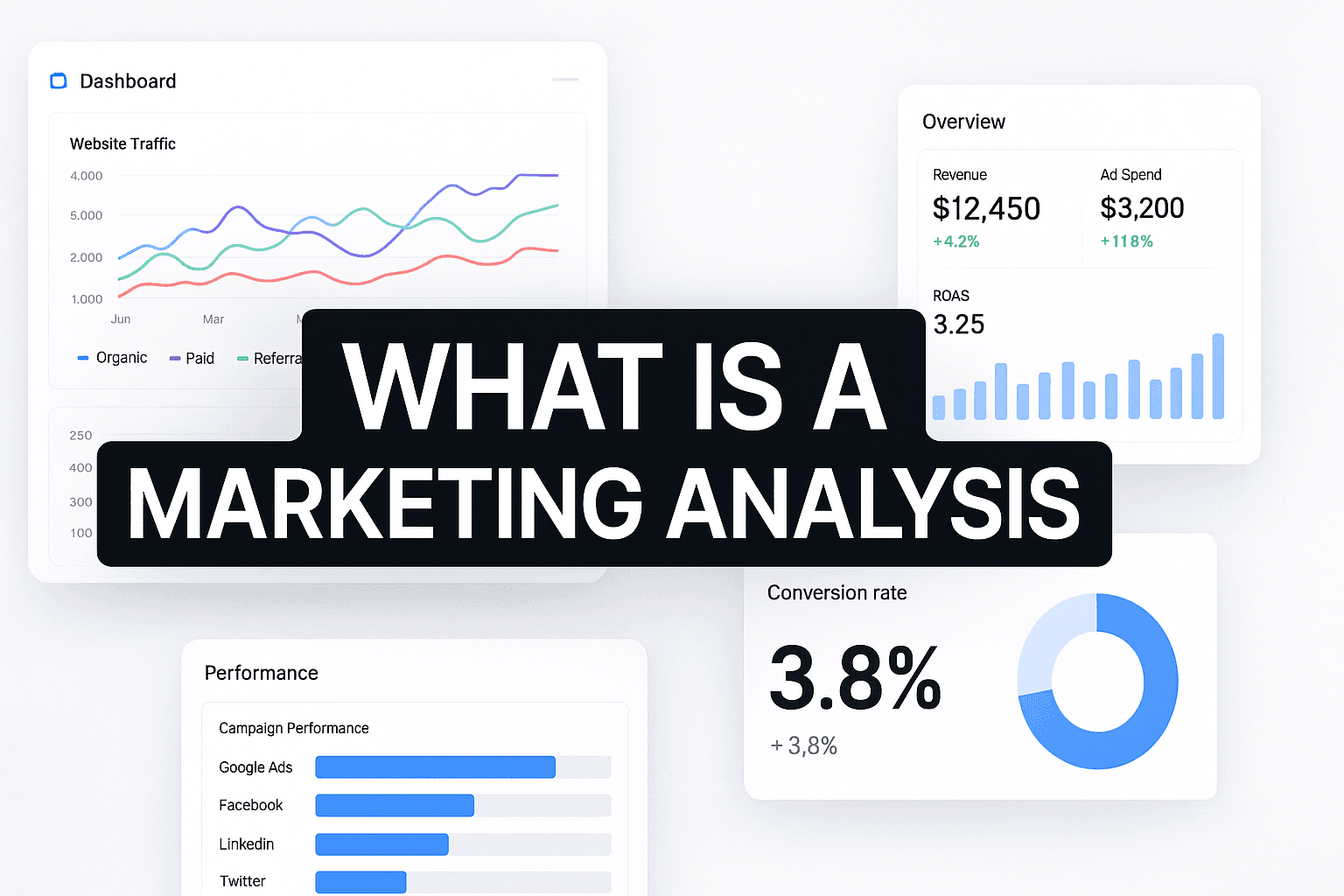
Digital Marketing Analytics: Turning Data into Better Decisions
Digital marketing generates a wealth of information. Every website visit, search, email click and social media interaction can offer clues about what an audience needs and how marketing activity is performing. Digital marketing analytics is the practice of collecting, measuring and interpreting this information to make more effective decisions.
Rather than relying on guesswork, businesses can use analytics to understand which channels attract the right people, which campaigns lead to meaningful action and where improvements are needed. The aim is not simply to gather more data, but to use relevant evidence to support business goals.
What does digital marketing analytics involve?
Digital marketing analytics brings together data from a range of online channels and customer interactions. These may include a website, search engines, paid advertising, social media, email marketing and e-commerce platforms. Analysing this data helps marketers assess performance across the customer journey, from the first point of contact through to a purchase or enquiry.
For example, a business might discover that organic search attracts a high number of visitors, while email marketing generates more repeat purchases. Another analysis might show that people are clicking on an advert but leaving the landing page without completing a form. Each finding can help guide the next step.
Why is it important?
Analytics helps businesses understand whether their marketing activity is achieving its intended purpose. It can reveal where budgets are being used effectively, highlight barriers in the customer journey and show how audiences respond to different messages or offers.
- Make informed decisions: Use evidence to guide campaign planning and prioritise activity.
- Improve performance: Identify underperforming pages, campaigns or channels and test ways to improve them.
- Understand audiences: Learn how people discover a business, what content they engage with and what actions they take.
- Measure return: Compare marketing costs with outcomes such as sales, leads or bookings.
- Plan for growth: Spot trends and opportunities that can inform future investment.
Choosing the right metrics
It is easy to become distracted by large volumes of data. A high number of page views or social media likes may look impressive, but these figures do not necessarily show whether marketing is contributing to business results. Metrics should be selected according to the goal being measured.
Common digital marketing metrics include:
- Reach and impressions: How many people may have seen content or an advert.
- Click-through rate: The proportion of people who click after seeing a link or advert.
- Conversion rate: The proportion of visitors who complete a desired action, such as making a purchase or submitting an enquiry.
- Cost per lead or acquisition: The average marketing cost of generating a lead or gaining a customer.
- Engagement: How people interact with content, including comments, shares, video views or email clicks.
- Customer lifetime value: An estimate of the value a customer brings over the course of their relationship with a business.
- Return on marketing investment: The financial return associated with marketing spend, assessed against a suitable business objective.
Not every metric is relevant to every organisation. A local service business may focus on qualified enquiries and booked appointments, while an online retailer may pay closer attention to revenue, average order value and repeat purchases.
How to build a useful analytics process
- Set clear objectives. Decide what marketing needs to achieve. Objectives should be specific enough to measure, such as increasing qualified enquiries or improving repeat purchases.
- Choose meaningful key performance indicators. Select a small group of metrics that show progress towards each objective. Avoid tracking numbers simply because they are readily available.
- Check tracking and data quality. Make sure analytics tools are configured correctly and important actions are being recorded. Inaccurate or incomplete tracking can lead to misleading conclusions.
- Bring data into context. Compare performance over time, between channels or against campaign objectives. Consider factors such as seasonality, changes in budget and differences in audience behaviour.
- Turn findings into action. Use insights to make a change, such as revising a landing page, adjusting targeting or testing a new message.
- Review and learn. Monitor the results of changes and use what you learn to shape future activity.
Attribution and the customer journey
People often interact with a business several times before making a decision. They might discover it through a search, read a blog post, see a social media update and later click an email link. Attribution is the process of assessing how different interactions contributed to a conversion.
A simple attribution model may give all the credit to the final interaction before a purchase. This can be useful, but it may overlook earlier activity that helped build awareness or trust. More detailed models consider several touchpoints, although they rely on sound data and should be interpreted carefully. No single model provides a complete picture of every customer’s decision-making process.
Privacy and responsible data use
Good analytics must be balanced with respect for people’s privacy. Businesses should be transparent about how data is collected and used, follow applicable data protection and cookie requirements, and collect only what is needed for a clear purpose. Access to data should be managed appropriately, with suitable security measures in place.
Privacy-conscious measurement is increasingly important as technology and regulations change. Clear consent practices, careful data handling and a focus on aggregated insights can help businesses measure performance responsibly.
Common challenges to avoid
Several issues can limit the value of marketing analytics. These include tracking too many metrics, drawing conclusions from a short period, comparing figures that use different definitions and treating correlation as proof of cause. Data from separate platforms may also be difficult to reconcile, particularly when each platform reports conversions differently.
To reduce these problems, document how key metrics are defined, check data regularly and combine quantitative results with practical context. Customer feedback, sales conversations and user research can help explain why a particular pattern appears in the numbers.
From measurement to progress
Digital marketing analytics is most valuable when it supports a cycle of planning, measurement and improvement. The process starts with clear objectives, uses reliable data to assess performance and ends with decisions that can be tested. Over time, this approach helps businesses understand what works, improve what does not and make better use of their marketing resources.
The goal is not to measure everything. It is to find the right information, interpret it thoughtfully and use it to create more relevant experiences for customers and stronger outcomes for the business.
Five Key Benefits of Digital Marketing Analytics for Enhanced Campaign Success
- Helps measure campaign performance.
- Reveals audience behaviour and preferences.
- Highlights opportunities to improve conversions.
- Supports smarter marketing budget decisions.
- Enables data-led planning and growth.
Challenges in Digital Marketing Analytics: Cost, Data Quality, Privacy Restrictions, and Attribution Complexity
- Can be costly to set up and maintain.
- Poor-quality data can lead to misleading decisions.
- Privacy rules limit how data can be collected and used.
- Attribution can make it difficult to identify what drives conversions.
Helps measure campaign performance.
Digital marketing analytics helps businesses measure campaign performance by showing how audiences respond to their activity across channels. Metrics such as impressions, clicks, conversions and cost per lead reveal whether a campaign is meeting its objectives and where improvements may be needed. With these insights, marketers can refine their approach, allocate budgets more effectively and focus on the activity delivering the strongest results.
Reveals audience behaviour and preferences.
Digital marketing analytics reveals how audiences behave and what they prefer by showing which content they engage with, which channels they use and what actions they take. These insights help businesses understand customers’ interests, needs and decision-making habits, making it easier to tailor messages, choose suitable platforms and create more relevant experiences. As a result, marketing can feel more personal and useful, helping to build stronger relationships with the people a business wants to reach.
Highlights opportunities to improve conversions.
Digital marketing analytics can highlight where potential customers are dropping out of the journey, revealing opportunities to improve conversions. By examining user behaviour, campaign performance and website interactions, businesses can identify obstacles such as unclear calls to action, slow-loading pages or a complicated checkout process. They can then test targeted changes, measure the results and focus on the improvements that make it easier for visitors to take the next step.
Supports smarter marketing budget decisions.
Digital marketing analytics helps businesses make smarter decisions about where to invest their marketing budget. By comparing the cost and results of different channels and campaigns, teams can identify which activities generate the most valuable leads, sales or enquiries. This makes it easier to direct spending towards what works, reduce investment in underperforming activity and adjust budgets as customer behaviour and business priorities change.
Enables data-led planning and growth.
Digital marketing analytics enables data-led planning and growth by showing which channels, campaigns and messages are delivering the strongest results. Businesses can use these insights to focus resources on effective activity, identify new opportunities and refine their strategy as customer behaviour changes. This makes planning more informed and helps support sustainable growth over time.
Can be costly to set up and maintain.
Digital marketing analytics can be costly to set up and maintain, particularly for businesses that need specialist software, technical integrations or skilled staff to collect and interpret data. Ongoing expenses may include subscription fees, training, system updates and compliance measures. Without clear goals, these costs can add up without delivering useful insights, so it is important to choose tools that suit the business’s needs and budget.
Poor-quality data can lead to misleading decisions.
Poor-quality data can lead to misleading decisions, causing businesses to invest in the wrong channels or make changes that weaken campaign performance. Inaccurate tracking, incomplete records, duplicate entries or inconsistent metrics can distort the picture of how customers behave and which activities drive results. To avoid acting on flawed insights, organisations should regularly check their data, use consistent measurement methods and verify that analytics tools are configured correctly.
Privacy rules limit how data can be collected and used.
Privacy regulations can limit how businesses collect, store and use customer data for digital marketing analytics. Requirements around consent, transparency and data retention may restrict access to information that helps measure campaigns or personalise communications. This can make performance harder to track and reduce the detail available for analysis. Businesses must therefore balance useful insights with responsible data practices, ensuring they follow relevant rules and respect people’s privacy.
Attribution can make it difficult to identify what drives conversions.
Attribution can make it difficult to identify what truly drives conversions, particularly when customers interact with several channels before taking action. A person might discover a business through search, read an email and later click a paid advert, making it hard to determine which interaction had the greatest influence. Different analytics platforms may also assign credit in different ways, so the results can be incomplete or misleading. As a result, businesses may overvalue some channels and overlook others that helped build awareness or trust.