
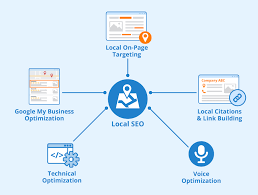
Google Local Search Optimisation: A Practical Guide for UK Businesses
When people search for a nearby service, shop or restaurant, Google may show a map and a selection of local businesses alongside its standard results. Appearing prominently in these results can help potential customers find your business, visit your website or get in touch.
Google local search optimisation is the process of improving your business’s visibility in location-based searches. It combines an accurate Google Business Profile with useful website content, trustworthy business information and a strong customer experience.
How Google local search works
Google says local results are mainly based on three considerations:
- Relevance: how closely a business matches what someone is searching for.
- Distance: how far the business is from the searcher or the location included in the search.
- Prominence: how well known or established the business appears to be, based on information such as links, reviews and other signals.
These factors help Google decide which businesses to show, but local rankings can vary depending on the search, the searcher’s location and other circumstances. No legitimate agency can guarantee a particular position.
Set up and improve your Google Business Profile
Your Google Business Profile is a key part of local search optimisation. It can display your business details on Google Search and Maps, so make sure the profile is claimed, verified and kept up to date.
Choose accurate business details
Use your real-world business name and select the most relevant primary category. Add additional categories only when they genuinely describe your services. Make sure your address, phone number, website and opening hours are correct. If your business serves customers at their locations rather than welcoming them to a public address, configure the profile as a service-area business and follow Google’s guidelines.
Describe your services clearly
Add relevant services, products and business information where these features are available. Write a concise, helpful description that explains what you do and who you serve. Avoid filling the business name or description with repetitive keywords: the profile should reflect your business accurately, not act as an advert packed with search terms.
Add useful photos
Clear, current images can help people understand what to expect. Consider adding photos of your premises, products, team or completed work, where appropriate. Use genuine images that represent the business rather than stock photos presented as your own.
Keep your website consistent and useful
Your website should reinforce the information in your Business Profile and make it easy for visitors to take the next step. Display consistent business details, including your name, address and phone number where relevant. Keep these details accurate across your website and other trusted online listings.
If you serve several towns or areas, create location pages only when each one can offer genuinely useful information. A good page explains the services available in that area, how customers can access them and what makes the business relevant locally. Avoid producing near-identical pages that simply swap one place name for another.
Make sure your site works well on mobile devices, loads reliably and has clear contact options. Depending on the business, useful features might include a click-to-call phone number, directions, opening hours, booking details or an enquiry form.
Build a fair and consistent review process
Reviews can help prospective customers make decisions and contribute to a business’s online prominence. Invite customers to leave honest feedback after a genuine interaction. Make the process straightforward, but do not offer incentives for reviews or pressure customers to leave positive ones.
Respond to reviews professionally, including critical feedback. A considered reply can show that the business listens and takes customer concerns seriously. Never share private customer information in a public response.
Strengthen your local presence
Accurate listings on reputable directories, professional associations and relevant local websites can help people discover your business and confirm its details. Focus on quality and consistency rather than submitting your details to every directory available.
Local links can also support your visibility. Consider legitimate opportunities such as community partnerships, local events, industry organisations or useful contributions to local publications. The aim is to build real connections and provide value, not to acquire links in bulk.
Measure results and keep improving
Use Google Business Profile performance data and website analytics to understand how customers find and interact with your business. Depending on the information available, monitor actions such as calls, website visits, direction requests and bookings. Track meaningful enquiries and sales too, rather than relying on rankings alone.
Review your profile and website regularly. Update seasonal opening hours, services, photos and contact information when they change. If performance shifts, check for inaccurate details, changes to your website, new competitors or a change in how customers search.
Common local SEO mistakes to avoid
- Using a misleading business name or an address where the business does not operate.
- Creating multiple profiles for the same business location without a valid reason.
- Adding towns or services to pages that offer little unique information.
- Buying reviews, offering rewards for them or asking only satisfied customers to post publicly.
- Ignoring incorrect opening hours, phone numbers or addresses across online listings.
- Expecting immediate results or guaranteed top rankings.
Make local search work for your customers
Effective Google local search optimisation is not just about appearing in a map result. It is about giving people accurate information, demonstrating that your business is trustworthy and making it simple to choose you. Start with a complete Business Profile, maintain a helpful website, encourage genuine customer feedback and measure the actions that matter to your business.
Top 5 FAQs on Enhancing Your Google Local Search Optimisation
- What is Google local search optimisation?
- How do I improve my Google local search rankings?
- How important is a Google Business Profile for local SEO?
- How long does it take to see results from local search optimisation?
- How can I get more customer reviews on Google?
What is Google local search optimisation?
Google local search optimisation is the process of improving how easily your business appears when people search Google for products or services in a specific area. It includes keeping your Google Business Profile accurate and complete, ensuring your website and business details are consistent, and building a strong reputation through genuine customer reviews and relevant local mentions. These steps can help nearby customers discover your business in Google Search and Maps.
How do I improve my Google local search rankings?
To improve your Google local search rankings, claim and verify your Google Business Profile, then keep your business name, address, phone number, opening hours and services accurate and up to date. Choose the most relevant business categories, add genuine photos and build a steady flow of honest customer reviews, responding to them professionally. Make sure your website is mobile-friendly and clearly explains your services and the areas you serve, and keep your details consistent across reputable online directories. Local rankings also depend on relevance, distance and prominence, so focus on providing useful information and a strong customer experience rather than trying to manipulate results; no ranking position can be guaranteed.
How important is a Google Business Profile for local SEO?
A Google Business Profile is essential for local SEO because it helps your business appear in Google Search and Maps when people look for nearby products or services. A complete, accurate profile—with the right business category, current contact details, opening hours, photos and service information—makes it easier for potential customers to find and assess your business. It can also support local visibility through customer reviews and profile interactions. While a profile does not guarantee higher rankings, keeping it up to date is one of the most important steps in strengthening your local presence.
How long does it take to see results from local search optimisation?
The time it takes to see results from local search optimisation varies depending on your location, competition and the current state of your online presence. Some improvements, such as correcting your Google Business Profile details, may have an impact relatively quickly, while stronger visibility and a steady increase in enquiries can take several weeks or months. Consistent updates, genuine customer reviews and useful local website content help build progress over time, but no specific ranking or timeframe can be guaranteed.
How can I get more customer reviews on Google?
To get more Google reviews, make it easy for customers to share honest feedback: send a polite follow-up after a purchase or completed job, include a direct link to your Google review page, or display a QR code at your premises. Ask all customers consistently, without pressure, and never offer rewards or discounts in exchange for reviews. Respond courteously to feedback, including negative comments, and use what customers say to improve your service.
- business optimizer
- engine
- google company
- google local
- google optimize
- google search
- google search engine
- googles
- local search strategy
- local seo
- local seo companies
- local seo company
- localsearch
- search engine optimization
- search engine optimization company
- search engines
- seo
- seo companies
- seo company
- strategies