
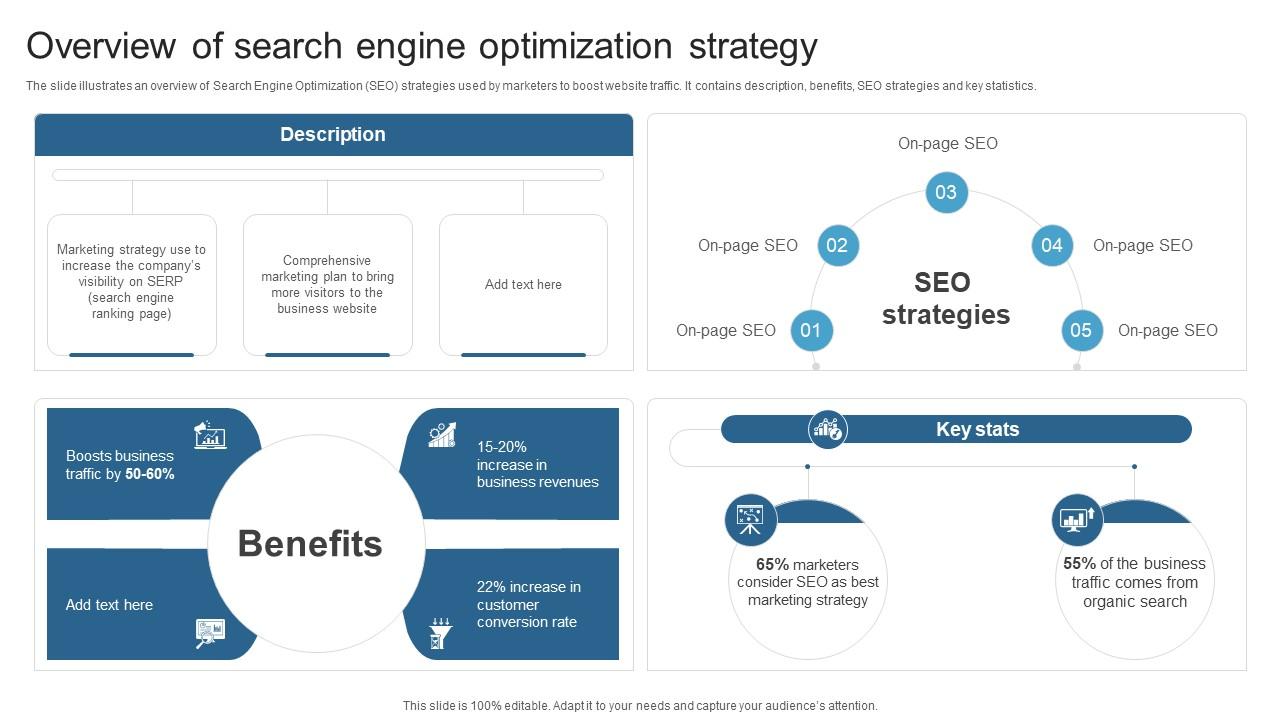
How to Improve Your Search Engine Optimisation
Improving search engine optimisation (SEO) is about making your website easier for people and search engines to understand. A well-planned SEO strategy can help your pages appear for relevant searches, attract more of the right visitors and provide a better experience once people arrive.
SEO is not a quick fix. Search engines consider many signals, and results can take time. Focus on useful content, a technically sound website and a clear understanding of what your audience needs.
Understand what your audience is searching for
Start by researching the questions, problems and topics your potential customers search for. Keyword research can help you discover the language people use and the intent behind their searches. Someone looking for information may need a helpful guide, while someone ready to buy may be comparing products or services.
Use this research to plan pages that answer specific needs. Avoid forcing keywords into your writing: clear, natural language is more useful to readers and makes your content easier to follow.
Create helpful, original content
Strong content gives visitors a clear reason to choose your page. Make it accurate, relevant and easy to read. Explain topics thoroughly where needed, use examples, and keep information up to date. Each page should have a clear purpose and offer something useful rather than simply repeating what is already available elsewhere.
Organise articles with descriptive headings and short paragraphs. Use images, diagrams or video where they genuinely support the information, and add descriptive alternative text to images that convey meaning.
Optimise page titles and descriptions
Write a unique, descriptive title for every important page. A good title tells people what the page is about and can help search engines understand its subject. Keep it concise and include the main topic naturally.
Meta descriptions do not directly determine rankings, but they can help searchers decide whether to visit your page. Summarise what readers will find and make the description specific to the page.
Make your website easy to navigate
A clear site structure helps visitors find information and helps search engines discover and understand your pages. Group related content together, use straightforward navigation and link relevant pages to one another with descriptive link text.
Check that important pages are reachable from other parts of your website. Avoid leaving valuable content isolated, with no internal links pointing to it.
Improve technical performance
Technical issues can prevent pages from being crawled, indexed or used comfortably. Review your website for broken links, duplicate pages, missing redirects and accidental indexing restrictions. Make sure important pages return the correct status and can be accessed by search engines.
Page experience matters too. Aim for fast loading, stable layouts and responsive design that works well on mobile devices. Use tools such as Google Search Console and website performance reports to identify problems, then prioritise fixes that affect important pages and users.
Use descriptive URLs and structured data where appropriate
Keep URLs short, readable and relevant to the page. A clear URL structure can make pages easier to understand and share. Avoid changing URLs unnecessarily; if a change is needed, set up an appropriate redirect from the old address.
Structured data can help search engines interpret particular types of information, such as products, events or business details. Use it only when it accurately describes visible content on the page, and validate it with suitable testing tools. Structured data does not guarantee enhanced search results.
Build trust and credibility
Show visitors why they can trust your website. Provide clear contact details, explain who is responsible for your content and keep important business information accurate. For advice that could affect a person’s health, finances or safety, take particular care to demonstrate expertise and support claims with reliable sources.
Earn links by publishing useful resources and building genuine relationships in your industry. Avoid buying links or using schemes designed to manipulate rankings, as these can put your website at risk.
Measure progress and keep improving
Use analytics and search performance tools to monitor organic visits, impressions, clicks and conversions. Look beyond rankings alone: the goal is to attract relevant visitors and help them complete meaningful actions.
Review performance regularly. If a page receives impressions but few clicks, its title and description may need to be clearer. If visitors arrive but do not take the next step, consider whether the page meets their needs and provides an obvious, useful call to action.
A practical SEO checklist
- Research the topics and search intent of your audience.
- Create useful, original content for a clear purpose.
- Write unique page titles and descriptive meta descriptions.
- Make navigation and internal links easy to follow.
- Check mobile usability, loading speed and technical errors.
- Keep business details and important content up to date.
- Track results and improve pages based on evidence.
Conclusion
To improve SEO, combine audience-focused content with a technically reliable website and consistent measurement. There is no single change that guarantees better rankings. Steady improvements that make your site more helpful, accessible and trustworthy are a more sustainable way to increase its visibility in search.
Seven Essential Tips to Boost Your Search Engine Optimisation
- Research keywords your audience actually uses.
- Write clear, useful page titles and meta descriptions.
- Create original, helpful content regularly.
- Use descriptive headings and concise URLs.
- Improve page speed and mobile usability.
- Add relevant internal links between pages.
- Earn quality backlinks from trusted websites.
Research keywords your audience actually uses.
Research the words and phrases your audience actually uses when searching online. Keyword research can reveal the questions they ask, the problems they want to solve and the terms they use to describe your products or services. Use these insights to create relevant pages and explain your offering in natural, clear language. Focus on matching the purpose behind each search, rather than simply adding keywords wherever they fit.
Write clear, useful page titles and meta descriptions.
Write a clear, descriptive page title and meta description for every important page. The title should sum up the page’s topic and include its main search term naturally, while the description should give people a useful reason to click by explaining what they’ll find. Keep both accurate and specific, and avoid cramming in keywords. Although meta descriptions do not directly improve rankings, they can help your page stand out in search results and attract relevant visitors.
Create original, helpful content regularly.
Create original, helpful content regularly to give people a reason to visit your website and return for more. Focus on answering your audience’s questions with accurate, useful information, rather than publishing for the sake of it. Fresh, relevant content can help search engines understand what your site offers, while building trust with readers over time. Keep quality at the heart of your schedule: one well-researched article is more valuable than several repetitive posts.
Use descriptive headings and concise URLs.
Use descriptive headings to organise your content and show readers—and search engines—what each section covers. A clear hierarchy, with one main heading followed by relevant subheadings, makes pages easier to scan and understand. Keep URLs concise, readable and closely related to the page topic; avoid unnecessary words, numbers or complicated strings. Together, well-structured headings and simple URLs make your content easier to navigate and can support stronger search visibility.
Improve page speed and mobile usability.
Improve page speed and mobile usability to give visitors a smoother experience and make your website easier to use on any device. Compress large images, reduce unnecessary scripts and check that pages load quickly, buttons are easy to tap, and text is readable on smaller screens. A fast, mobile-friendly website can help keep visitors engaged and supports your wider SEO efforts.
Add relevant internal links between pages.
Add relevant internal links between related pages to help visitors find useful information and move around your website more easily. Clear, descriptive link text also helps search engines understand how your pages connect and what each page is about. Link naturally where it adds value, rather than adding links just to include more keywords.
Earn quality backlinks from trusted websites.
Earn quality backlinks by creating useful, original content that trusted websites genuinely want to reference. Links from relevant, reputable sources can help search engines understand your site’s credibility and may bring interested visitors directly to your pages. Focus on building relationships, contributing expert insights and offering valuable resources, rather than buying links or taking part in schemes designed to manipulate rankings.