
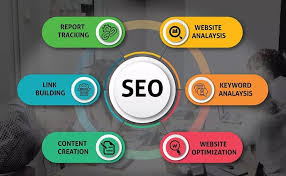
How to SEO Your Company Website
Search engine optimisation (SEO) helps your company website appear in relevant search results and attract people looking for the products or services you offer. It is not a quick fix or a one-off task: good SEO combines useful content, a technically sound website and a clear understanding of your customers.
Whether you manage a small business website or a larger company site, the steps below can help you build a practical SEO strategy.
Understand what your customers search for
Start by researching the words and questions people use when looking for your products, services or expertise. These searches reveal what potential customers need and how they describe it.
- List your main products, services and areas of expertise.
- Think of the questions customers ask before they buy or get in touch.
- Use keyword research tools to explore search terms, related phrases and search intent.
- Consider location-based searches if your company serves a particular town, region or country.
Choose search terms that genuinely match the page and your business. A phrase with a high search volume is not necessarily valuable if the people using it are unlikely to become customers.
Create helpful, original content
Each important page should provide a clear answer to the visitor’s needs. Explain what your company offers, who it is for and what makes your service relevant. Use plain, specific language rather than filling pages with repetitive keywords.
Useful content might include detailed service pages, product information, practical guides, case studies and answers to common questions. Make sure each page has a clear purpose. If two pages cover almost the same topic, consider combining them into one more complete resource.
Optimise page titles and headings
Page titles help search engines and visitors understand what a page is about. Write a unique, accurate title for each important page and include its main topic naturally. Keep titles concise enough to be understood at a glance.
Use headings to organise the page. The main heading, marked as an h1, should describe the page’s subject. Subheadings, such as h2 and h3, can break the content into logical sections. Write headings for people first, rather than forcing keywords into every one.
Make your website easy to navigate
A clear website structure helps visitors find information and helps search engines discover important pages. Group related content together, use descriptive navigation labels and link between relevant pages.
For example, a service page could link to a related case study, a useful guide and a contact page. Use meaningful link text, such as “read our guide to website accessibility”, instead of vague phrases such as “click here”.
Improve the technical foundations
Technical SEO helps search engines access and understand your website. Check that:
- Your important pages can be crawled and indexed.
- Your website uses HTTPS.
- Your XML sitemap is accurate and available to search engines.
- Broken links and unnecessary redirects are fixed.
- Duplicate or very similar pages are managed appropriately.
- Images have suitable file sizes and descriptive alternative text where needed.
If your site runs on a content management system, some of these tasks may be handled by your platform or an SEO plugin. Still, check the results rather than assuming everything is configured correctly.
Make the site work well on mobile
Many people visit company websites on a mobile device. Pages should be readable without zooming, menus should be easy to use and important actions—such as calling, booking or requesting a quote—should be straightforward to complete.
Test key pages on different screen sizes. Pay attention to text size, buttons, forms and whether anything important is hidden or difficult to use.
Improve page speed and user experience
Slow pages can frustrate visitors, particularly on mobile connections. Compress large images, remove unnecessary scripts and review features that add weight without helping users. Measure performance with reputable testing tools, then prioritise issues that affect real visitors and important pages.
Speed is only one part of user experience. Clear writing, accessible design, useful page layouts and trustworthy information all help people use your website with confidence.
Strengthen local SEO where relevant
If your company serves customers in a specific area, keep your business details consistent across your website and relevant online listings. Include accurate contact information and explain the locations you serve. A complete business profile on suitable local platforms can also help nearby customers discover you.
Only create location pages when they provide genuinely useful, distinct information. Repeating the same text with different place names is unlikely to help visitors.
Build trust and demonstrate experience
People are more likely to choose a company when they can understand who is behind it and why they should trust it. Provide clear company information, accurate contact details, examples of your work and relevant customer feedback. Keep claims specific and support them with evidence where possible.
For topics where incorrect advice could have serious consequences, make sure content is accurate, current and reviewed by suitably qualified people.
Measure results and keep improving
Use tools such as Google Search Console and website analytics to monitor how people find and use your site. Track useful measures, including organic visits, enquiries, sales and the performance of important pages. Rankings can offer context, but they should not be the only measure of success.
Review your data regularly. Look for pages that are gaining visibility, queries that bring relevant visitors and content that needs updating. Make changes based on evidence, then allow time to assess their impact.
Common SEO mistakes to avoid
- Repeating keywords unnaturally throughout a page.
- Publishing content that is copied, thin or created only to attract search traffic.
- Using the same page title and description across the whole site.
- Ignoring mobile usability and page performance.
- Buying links or using tactics designed to manipulate search rankings.
- Expecting immediate results from a long-term marketing channel.
Build SEO into your company website
To SEO your company website effectively, focus on helping the right people find clear, useful information. Research your audience, create strong pages, make the site technically accessible and review performance over time. Consistent improvements can strengthen your visibility in search and make your website more useful to potential customers.
Top 6 SEO Tips to Enhance Your Company Website’s Performance
- Use clear, descriptive page titles.
- Write helpful content for your customers.
- Include relevant keywords naturally.
- Make your website mobile-friendly.
- Improve page loading speed.
- Earn links from trusted websites.
Use clear, descriptive page titles.
Use clear, descriptive page titles to help both search engines and visitors understand what each page is about. Give every important page a unique title that summarises its content, and include the main search term naturally where it fits. Keep titles concise and specific—for example, “Commercial Electrical Services in Bristol” is more helpful than “Our Services”. Avoid repeating keywords or using the same title across multiple pages, as this can make your site harder to navigate and its search listings less informative.
Write helpful content for your customers.
Write content that answers your customers’ questions and helps them make informed decisions. Use clear, straightforward language, explain your products or services accurately, and include practical details that readers will find useful. Helpful, original content gives visitors a better experience and can help search engines understand why your website is relevant to their needs.
Include relevant keywords naturally.
Include relevant keywords naturally throughout your company website, using the terms your customers are likely to search for in page titles, headings and useful body copy. Make sure each phrase fits the context and accurately describes the page, rather than repeating keywords unnaturally. Clear, helpful content is better for both visitors and search engines.
Make your website mobile-friendly.
Make sure your website is easy to use on mobile phones and tablets, as many potential customers will visit it on a smaller screen. Use a responsive design so pages adapt to different devices, keep text readable without zooming, and make menus, buttons and forms simple to use. Test key pages on mobile to spot anything that loads slowly, appears cut off or is difficult to tap. A smooth mobile experience helps visitors find what they need and can support your SEO.
Improve page loading speed.
Improve your website’s loading speed to give visitors a smoother experience and make it easier for them to access your content, especially on mobile devices. Compress large images, remove unnecessary scripts and choose reliable hosting, then test key pages with performance tools to identify what needs attention. Faster pages can support SEO, but focus on making the site genuinely quick and easy to use rather than chasing a perfect score.
Earn links from trusted websites.
Earn links from trusted websites by creating genuinely useful content that other businesses, industry publications and professional organisations will want to reference. You could share original research, practical guides, expert insights or helpful resources, then build relationships with relevant website owners and editors. Focus on earning links naturally from reputable, relevant sources rather than buying links or using schemes, which can damage your site’s credibility and search performance.
- business optimizer
- business site
- business website
- business websites
- engine
- engineering
- optimizely
- search engine optimization
- search engine optimization company
- search engine optimization service
- search engines
- seo
- seo agencies
- seo agency
- seo companies
- seo company
- seo optimization services
- seo services
- seo web services
- site company
- site engine
- web and seo
- website
- website optimization services