
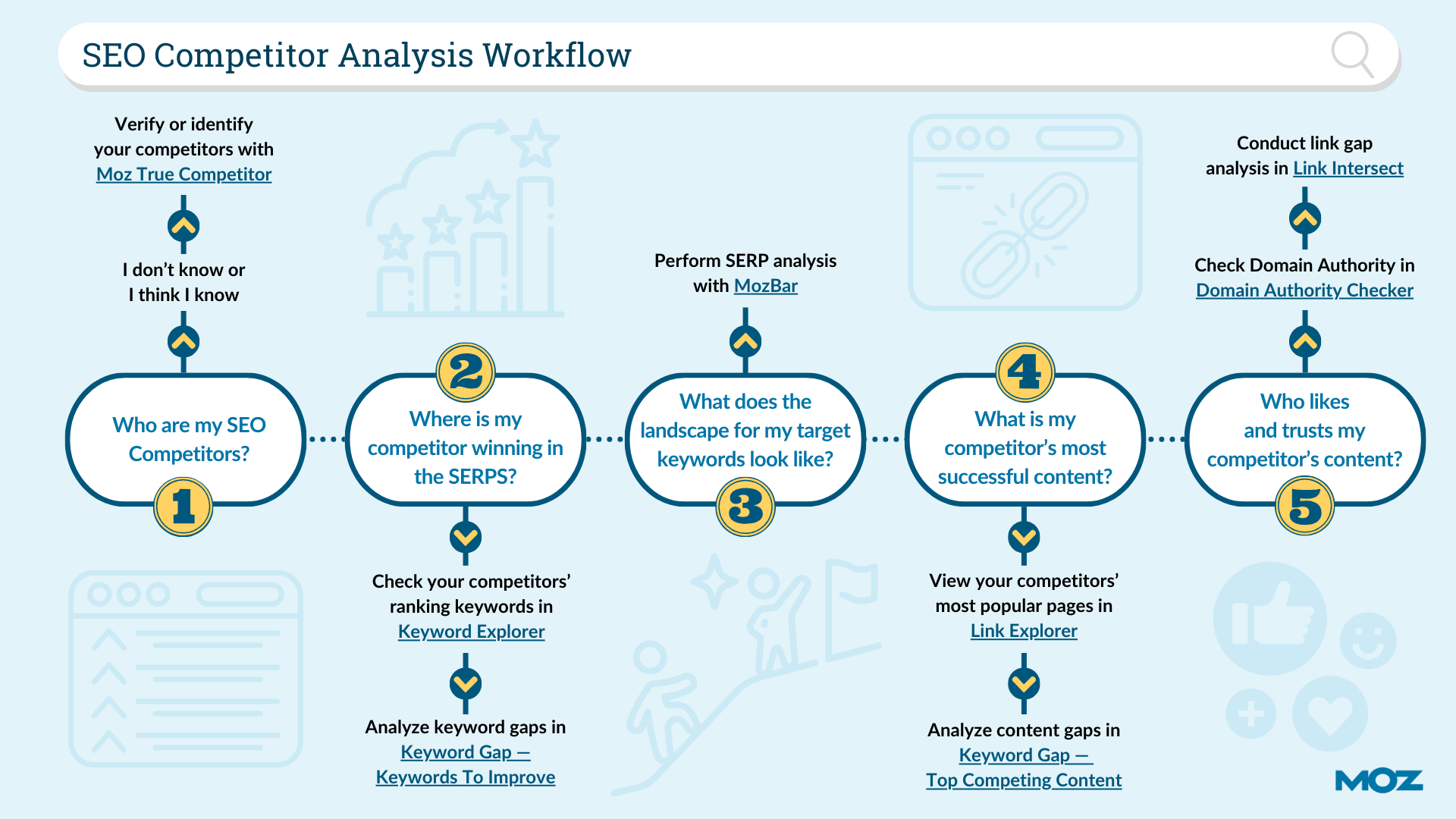
SEO Competitor Site Analysis: A Practical Guide
SEO competitor site analysis helps you understand what is working for other websites in search results — and where your own site can improve. By examining competitors’ content, technical performance, backlinks and user experience, you can make better-informed decisions about your SEO strategy.
The aim is not to copy another website. It is to identify useful opportunities, understand what searchers expect and create a stronger experience for your audience.
What is SEO competitor site analysis?
SEO competitor site analysis is the process of reviewing websites that compete with yours in organic search. These may be direct business rivals, but they can also be publishers, directories or other sites that appear for the search terms you want to target.
A thorough analysis looks beyond domain authority or a list of keywords. It considers how competitors attract visitors, structure their websites, answer searchers’ questions and guide people towards an action.
Why analyse competing websites?
Competitor research can help you:
- Find relevant search topics and keywords you may have overlooked.
- Understand the type and depth of content that performs well in your market.
- Spot gaps in your website’s content or site structure.
- Identify potential backlink sources and industry partnerships.
- Compare technical performance and user experience.
- Prioritise SEO work based on realistic opportunities.
Search results change over time, so competitor analysis is best treated as an ongoing source of insight rather than a one-off task.
Identify your true SEO competitors
Start by searching for the topics, products or services you want your website to rank for. Note which domains appear repeatedly in the organic results. These are your search competitors, even if they do not sell the same products or services as you.
Separate competitors into useful groups, such as:
- Direct competitors: businesses offering similar products or services.
- Content competitors: websites publishing information on the same subjects.
- Search-result competitors: any domains taking visibility for your target queries.
Choose a manageable set of sites to review. A small group of relevant competitors is usually more useful than a long list of loosely related domains.
Compare keyword visibility and search intent
Review the search terms for which competitors appear, along with the pages that rank for them. Look for subjects where several competitors have strong visibility but your site has little or no relevant content. These may point to content opportunities.
Do not focus on keyword volume alone. Consider the purpose behind each search. Someone searching for “what is cloud accounting?” is likely looking for an explanation, while a person searching for “cloud accounting software pricing” may be comparing providers.
Group keywords by topic and intent, then check whether your existing pages meet the same need. Search results themselves are useful evidence: examine the page types, headings and formats that Google is showing.
Assess competitors’ content
Review the pages that attract the most search visibility. Consider what makes them useful, rather than simply measuring their word count. Ask:
- Does the page answer the main question clearly?
- Is the information current, specific and easy to understand?
- Does it cover related questions or practical next steps?
- Are headings and page sections easy to scan?
- Does the page include original expertise, examples or evidence?
- Are there helpful images, diagrams, videos or tools?
- Does the page link to relevant pages elsewhere on the site?
Use this review to find genuine content gaps. A better page may be more concise, more accurate or more actionable — it does not necessarily need to be longer.
Review site structure and technical SEO
A competitor’s site structure can reveal how it organises information and directs visitors to important pages. Look at its navigation, category pages, URL patterns and internal links. Consider whether related pages are grouped logically and whether key content is easy to reach.
You can also compare technical factors, including:
- Mobile usability and page layout.
- Page loading performance and Core Web Vitals.
- Indexable pages and the use of canonical tags.
- Redirects, broken links and crawl accessibility.
- Structured data where it is relevant and correctly implemented.
Public tools can offer useful estimates, but they do not provide a complete picture of another site’s technical setup. Use findings as prompts for investigation, not as definitive evidence.
Examine backlink profiles
Backlinks can help show which websites, publications and organisations refer to your competitors. Review the context of those links: a relevant editorial mention may be more valuable than a large number of unrelated links.
Look for patterns such as industry publications covering a competitor, useful resources that attract citations, or partnerships that have generated legitimate mentions. These observations can inform your own digital PR and content plans.
Avoid trying to replicate every link you find. Focus on earning relevant links through useful content, genuine relationships and credible expertise. Low-quality link schemes can put a site at risk.
Compare user experience and conversion journeys
SEO brings people to a website, but the site still needs to help them take the next step. Review how competitors present their products or services, build trust and make contact or purchase options clear.
Consider the clarity of calls to action, the availability of pricing or supporting information, and how well the site works on mobile. Also note any elements that create friction, such as unclear navigation or forms that ask for unnecessary details.
This is not a reason to imitate a competitor’s design. Instead, use the comparison to identify ways your own website can be clearer and more helpful.
Turn findings into an action plan
Analysis is only useful when it leads to decisions. Record your findings in a simple comparison sheet, with a column for each competitor and rows for areas such as target topics, strongest pages, content gaps, backlinks and technical observations.
Then prioritise potential tasks by considering their likely impact, the effort required and how closely they support your business goals. Possible actions might include improving an existing page, creating a new resource, strengthening internal links or fixing a technical issue.
Set a baseline before making changes. Track relevant measures over time, such as organic clicks, impressions, rankings for priority topics, conversions and qualified enquiries. This helps you understand whether the work is making a meaningful difference.
Common mistakes to avoid
- Choosing competitors by brand alone: search competitors may differ from your commercial rivals.
- Chasing every keyword: prioritise topics that suit your audience and offer.
- Copying content or design: use competitor insights to inform original work.
- Relying on estimated metrics: third-party tools provide directional data, not exact figures.
- Ignoring search intent: a page may target the right phrase but still fail to meet the searcher’s needs.
- Failing to revisit the analysis: competitors, search results and customer expectations evolve.
Conclusion
SEO competitor site analysis gives you a clearer view of the search landscape and helps uncover practical ways to improve your website. By examining relevant competitors’ keywords, content, technical foundations, backlinks and user journeys, you can identify opportunities that are grounded in evidence.
The strongest approach is to learn from what the search results reveal, then create a more useful and distinctive experience for your own audience.
Essential FAQs on SEO Competitor Site Analysis: Understanding, Tools, and Strategies
- What is SEO competitor site analysis?
- Why is SEO competitor analysis important?
- How do I identify my SEO competitors?
- Which tools can I use for SEO competitor analysis?
- How can I find the keywords my competitors rank for?
- How do I analyse a competitor’s content and search intent?
- How can I analyse my competitors’ backlinks?
- How often should I carry out SEO competitor site analysis?
What is SEO competitor site analysis?
SEO competitor site analysis is the process of reviewing websites that compete with yours in organic search to understand how they attract visitors and perform in search results. It typically examines their keywords, content, site structure, technical SEO and backlinks, helping you identify gaps and opportunities to improve your own website. The goal is not to copy competitors, but to learn what works for your audience and develop a stronger, more useful SEO strategy.
Why is SEO competitor analysis important?
SEO competitor analysis is important because it shows how other websites are attracting organic traffic and where opportunities may exist for your own site. By comparing their keywords, content, backlinks and user experience, you can identify gaps, prioritise improvements and build a more effective SEO strategy. It also helps you understand what searchers expect, so you can create more useful content and stand out in search results.
How do I identify my SEO competitors?
Identify your SEO competitors by searching Google for the keywords and topics you want to rank for, then note the websites that appear regularly in the organic results. These may not be direct business rivals: publishers, directories and specialist websites can also compete for the same search visibility. Focus on the sites that rank for queries relevant to your audience and business goals, and review them periodically as search results change.
Which tools can I use for SEO competitor analysis?
You can use tools such as Semrush, Ahrefs or Moz to compare competitors’ organic keywords, rankings and backlink profiles, while Similarweb can provide estimates of their traffic sources. For a closer look at pages and site structure, try Screaming Frog SEO Spider; Google Search and Google Trends can also reveal ranking content and changing search interest. Use Google PageSpeed Insights to assess page performance. Bear in mind that third-party traffic and ranking figures are estimates, so treat them as useful indicators rather than exact data.
How can I find the keywords my competitors rank for?
To find the keywords your competitors rank for, use an SEO tool such as Ahrefs, Semrush or Moz to analyse their domain and view its organic keyword report. You can filter the results by country, ranking position, search volume or page to uncover terms that are relevant to your business. Compare several competitors to spot topics they share and gaps your website could address. These tools provide estimates, so check promising keywords in search results and consider whether the intent matches your audience and services.
How do I analyse a competitor’s content and search intent?
To analyse a competitor’s content and search intent, review the pages ranking for your target keywords and consider what searchers are trying to achieve: find information, compare options or make a purchase. Look at each page’s format, topics, headings, level of detail and supporting features, such as examples, FAQs or calls to action. Then compare these with your own content to identify gaps and ways to provide a clearer, more useful answer. Use competitors’ pages as research, not templates: create original content that meets the same need and adds genuine value.
How can I analyse my competitors’ backlinks?
To analyse your competitors’ backlinks, use an SEO tool such as Ahrefs, Semrush or Majestic to review the websites linking to their pages. Look beyond the total number of links: assess the referring sites’ relevance and credibility, which pages attract links, the context of each mention and the anchor text used. This can reveal useful opportunities, such as industry publications, directories or resources worth approaching with your own original content. Treat third-party metrics as estimates, and focus on earning relevant, editorial links rather than copying every link or pursuing low-quality link schemes.
How often should I carry out SEO competitor site analysis?
For most businesses, a detailed SEO competitor site analysis every three to six months is a sensible starting point, with lighter checks each month to spot significant changes in rankings, content or backlinks. Review your competitors more frequently when entering a new market, launching a campaign or responding to a major search algorithm update. The right schedule depends on how quickly your industry and search results change, so treat competitor analysis as an ongoing process rather than a one-off task.